Finnish Lapland is one of the best places for Aurora viewing because it sits beneath the auroral oval, the ring of geomagnetic activity encircling the North Pole, and offers exceptionally dark skies with minimal light pollution for up to 200 nights of potential Northern Lights activity per year. The region around Levi, located well above the Arctic Circle, combines ideal geographic positioning with reliable winter darkness, making it a world-class destination for witnessing the Aurora Borealis. Below, we explore what makes this corner of the world so special for Northern Lights viewing and how to make the most of your experience.
What Makes the Arctic Circle Ideal for Northern Lights?
The Arctic Circle is ideal for Northern Lights viewing because it lies directly beneath the auroral oval, a band of charged solar particles that collide with atmospheric gases to produce the Aurora Borealis. Finnish Lapland, positioned between 66 and 70 degrees north latitude, falls squarely within this zone, giving it one of the highest frequencies of auroral displays on Earth.
The Northern Lights occur when electrically charged particles from the sun are funneled by Earth’s magnetic field toward the polar regions. As these particles strike oxygen and nitrogen molecules in the upper atmosphere, they release energy in the form of shimmering green, purple, pink, and white light. The closer you are to the magnetic pole, the more frequently and vividly these displays appear overhead rather than low on the horizon.
Finnish Lapland holds a geographic advantage over many other Aurora destinations. Unlike coastal regions in Norway or Iceland, the interior of Finnish Lapland often enjoys stable, cold, continental weather patterns during winter. Clear skies are more common inland, and the flat fells and open landscapes around Levi provide unobstructed views of the sky in every direction. This combination of magnetic latitude, weather stability, and open terrain is what makes the region so consistently rewarding for Aurora Borealis tours in Finland.
How Do Dark Skies and Low Light Pollution Help in Lapland?
Dark skies and low light pollution are essential for Northern Lights viewing because the Aurora Borealis is a relatively faint atmospheric phenomenon that artificial light can easily wash out. Finnish Lapland has some of the lowest light pollution levels in all of Europe, allowing even subtle auroral displays to appear vivid and detailed to the naked eye.
During the polar night, known in Finnish as kaamos, the sun does not rise above the horizon for several weeks in the deepest part of winter. Even outside the polar night period, winter days in Lapland are remarkably short, providing extended hours of darkness ideal for Aurora watching. In the Levi area, you can experience near-total darkness from late afternoon through mid-morning during December and January, giving you a generous window to spot the lights.
Why Population Density Matters
Finnish Lapland is one of the most sparsely populated regions in Europe. The municipality of Kittilä, where Levi is located, has fewer than two people per square kilometer. This means that once you travel even a short distance from the village center, you encounter virtually no artificial light. Street lamps, commercial signage, and residential glow are almost nonexistent on the surrounding fells and frozen lakes, creating a natural observatory for the night sky.
How Darkness Enhances the Experience
Under truly dark skies, the Northern Lights reveal colors and structures that are invisible in areas with moderate light pollution. Faint green arcs can suddenly explode into curtains of violet and magenta. The contrast between the dark landscape and the illuminated sky creates a sense of immersion that photographs rarely capture. This is why experienced Aurora chasers consistently rank Finnish Lapland among the top destinations worldwide, and why a Northern Lights safari in Finland offers something that urban or coastal locations simply cannot match.
When Is the Best Season to See the Northern Lights in Finnish Lapland?
The best season to see the Northern Lights in Finnish Lapland runs from September through March, with peak viewing conditions typically occurring between November and February when darkness is most prolonged and skies are often clear and cold. Within this window, the hours between 9 PM and 2 AM tend to produce the most frequent and intense displays.
Several factors influence the quality of Aurora viewing throughout the season:
- September and October: Darkness returns after the midnight sun, and the first auroral displays of the season appear. Skies can still be partly cloudy, but the autumn equinox brings a spike in geomagnetic activity that often produces strong shows.
- November through January: The polar night delivers maximum darkness. Snow covers the landscape, reflecting any ambient light and creating a stunning backdrop for the Aurora. These months offer the longest nightly viewing windows.
- February and March: Days grow longer, but nights remain dark enough for excellent viewing. Weather tends to stabilize, and clear skies become more frequent. Many seasoned travelers consider late February the sweet spot for combining Northern Lights with daytime winter activities.
Solar activity also plays a significant role. The sun operates on an approximately 11-year cycle, and periods of heightened solar activity produce more frequent and intense geomagnetic storms. The current solar cycle has been delivering strong auroral activity, making the 2025 and 2026 seasons particularly promising for visitors to Finnish Lapland. Even during quieter solar periods, however, the Aurora appears regularly at these latitudes, so there is no truly “bad” time to visit within the September to March window.
What Activities Can You Combine With Aurora Viewing in Levi?
Aurora viewing in Levi pairs naturally with snowmobile safaris, ice fishing excursions, reindeer farm visits, and cozy campfire experiences in traditional Lapp tents. Combining activities turns a Northern Lights trip into a full Arctic adventure rather than simply waiting in the cold for the sky to light up.
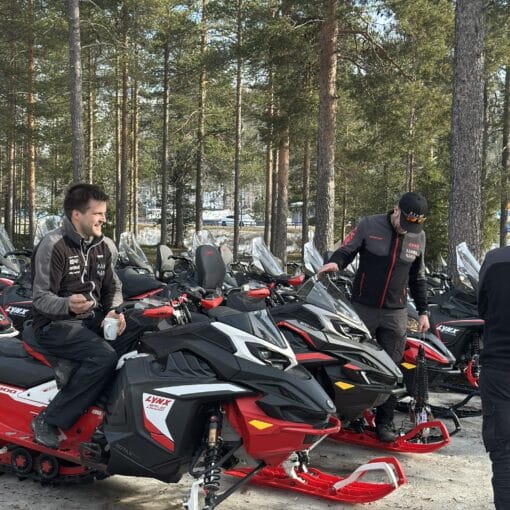
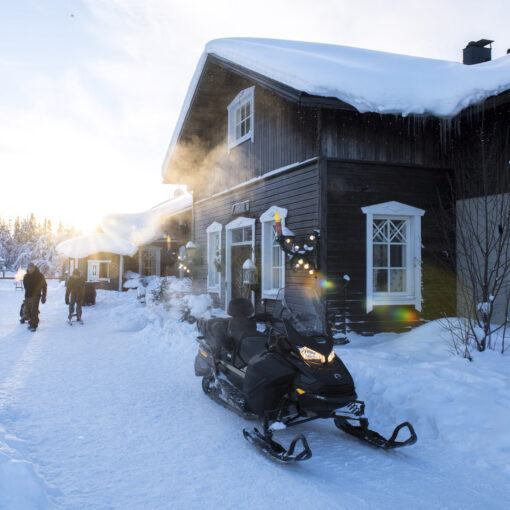
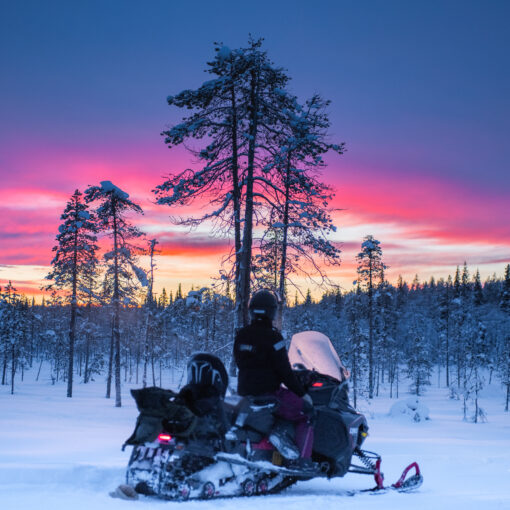
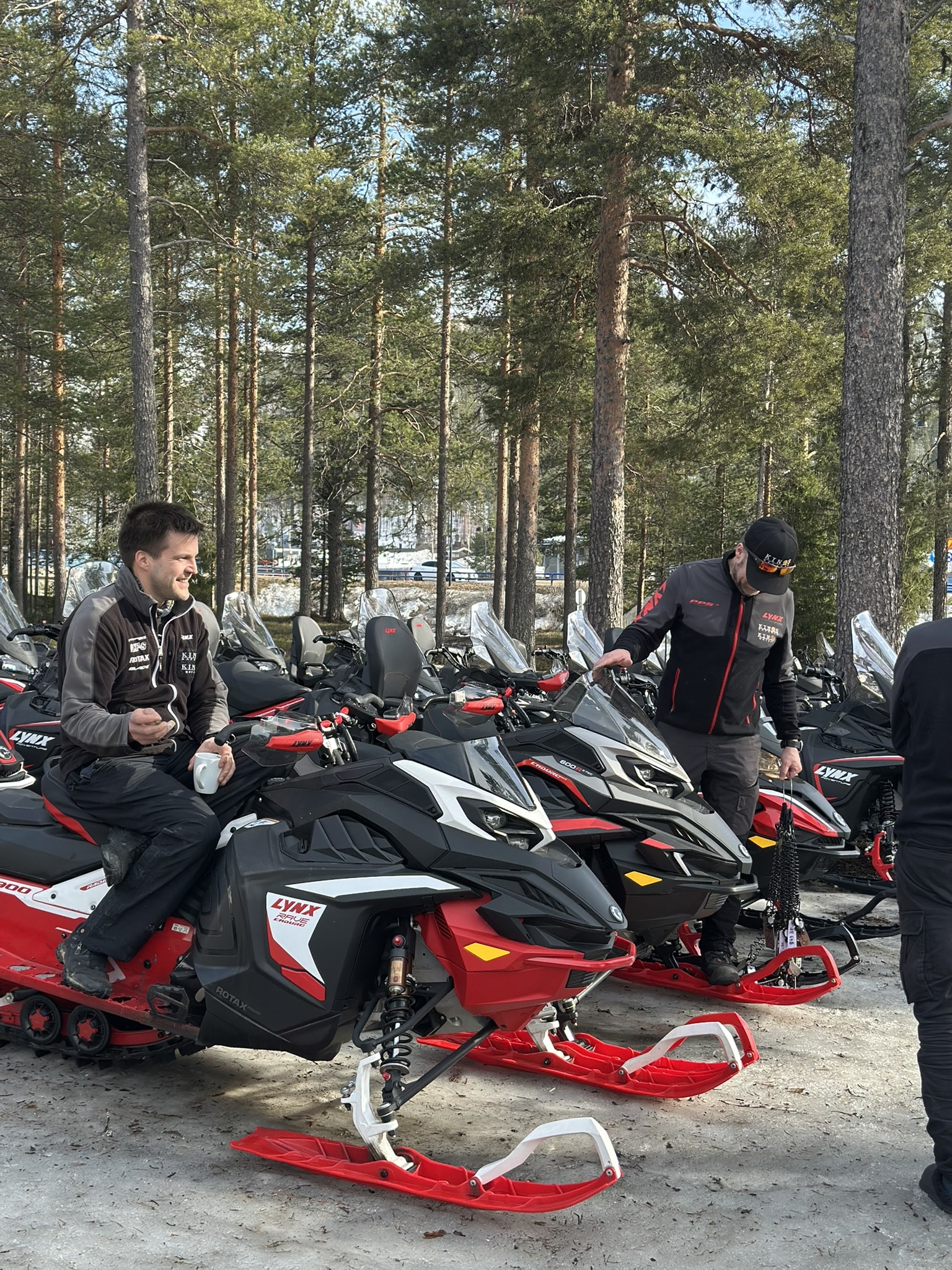
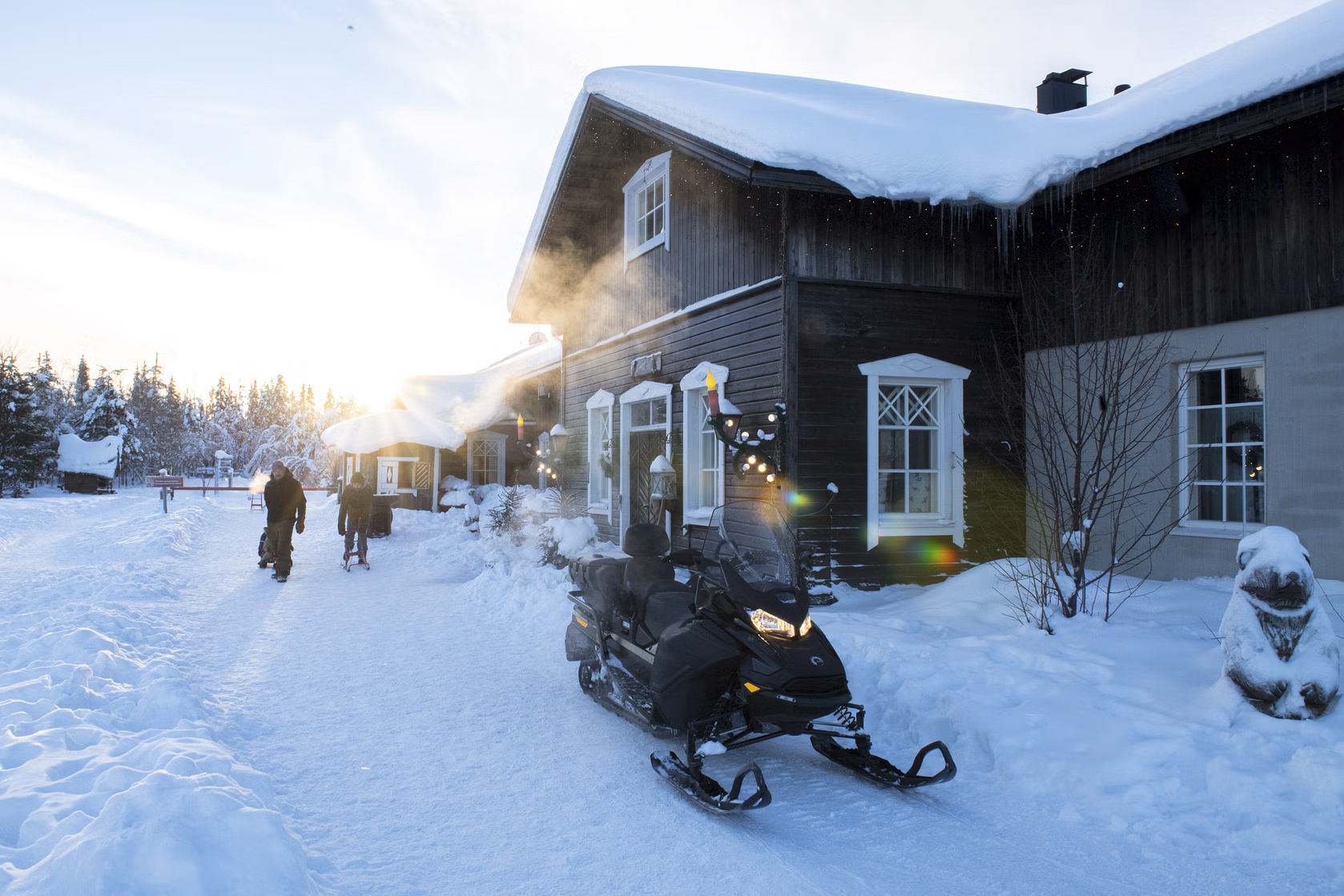
One of the most popular ways to hunt for the Aurora Borealis is aboard a snowmobile, which allows you to travel quickly to the darkest, most remote locations away from any village lights. We offer evening snowmobile safaris departing at 6 PM that take you deep into the Lappish wilderness, where the chances of witnessing the Northern Lights are at their highest. The mobility of a snowmobile means your guide can adjust the route in real time based on cloud cover and auroral forecasts.
Beyond snowmobile excursions, Levi offers a rich menu of winter experiences that complement Aurora chasing:
- Ice fishing: Spend a peaceful afternoon drilling through a frozen lake and waiting for Arctic char or perch to bite, then transition into an evening of Aurora watching from the same pristine location.
- Campfire coffee in a Lapp tent: Warm up with traditional Finnish coffee brewed over an open fire inside a cozy kota, then step outside to scan the sky for green and violet ribbons of light.
- Reindeer and husky experiences: Visit a local reindeer farm or take a dog sled ride through snow-covered forests during the day, saving the evening hours for Northern Lights viewing.
We keep our group sizes small to ensure a personal, unhurried experience, and our guides are skilled at reading both weather conditions and auroral forecasts. Whether you choose a daytime snowmobile safari to a Lapp tent followed by an evening Aurora hunt, or an all-in-one evening adventure, Levi provides the perfect base for combining thrilling Arctic activities with the magic of the Northern Lights. Our office is located right in the center of Levi, making it easy to plan your itinerary and head out into the wilderness at a moment’s notice.