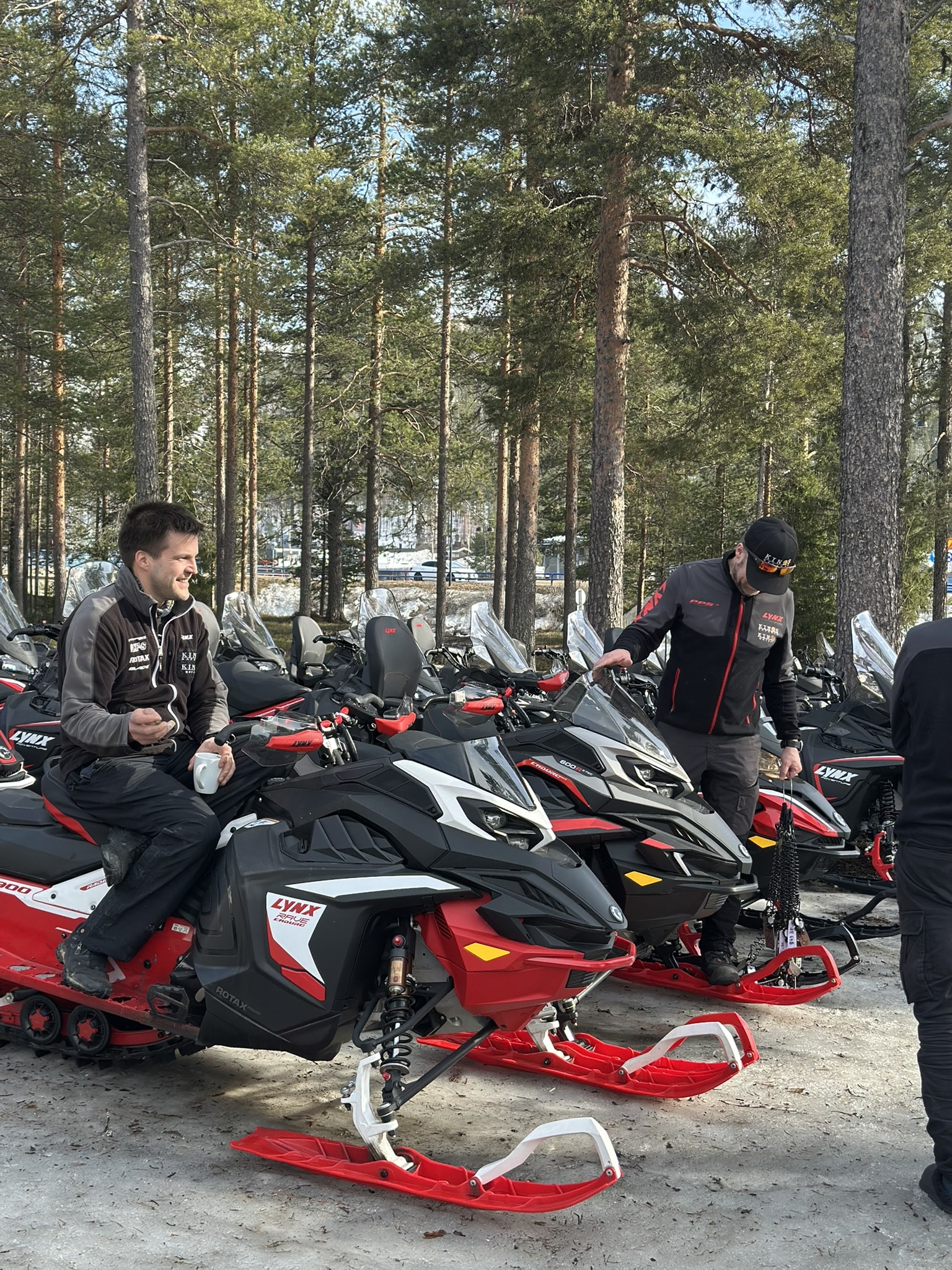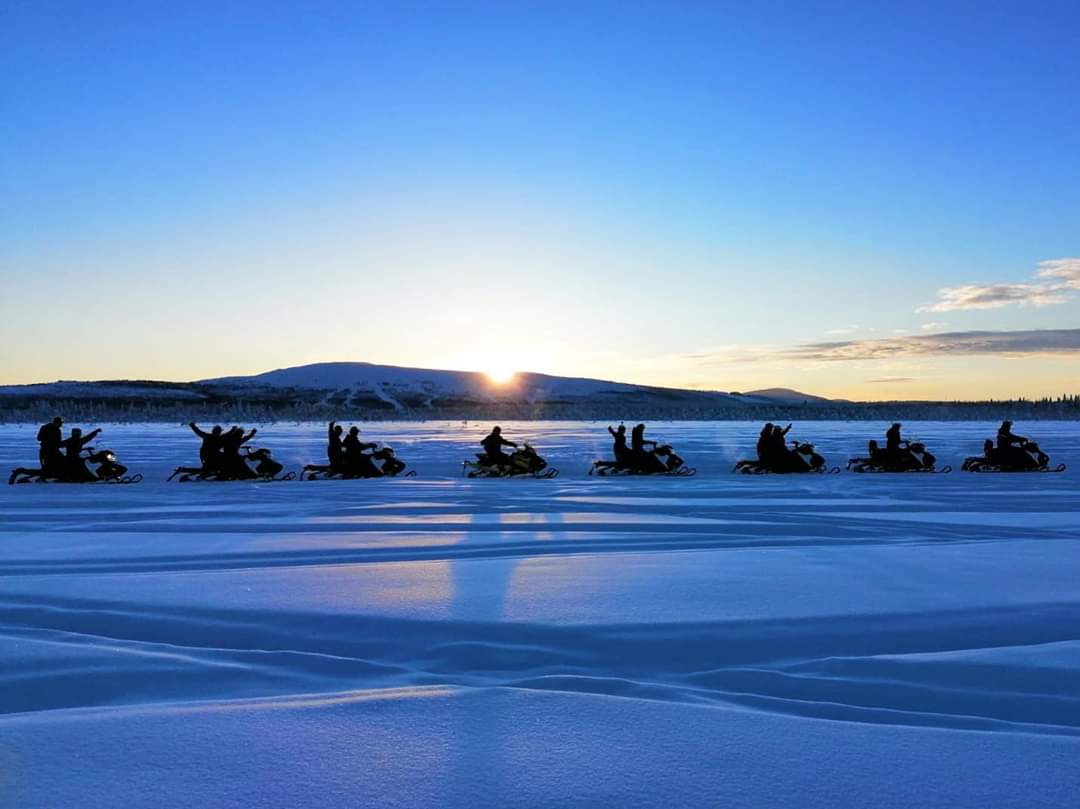
Snowmobile safaris help you find the Aurora Borealis by taking you far from light pollution quickly, covering vast distances across the Arctic wilderness to reach prime viewing spots that would be inaccessible on foot. Guided snowmobile tours in Finnish Lapland combine expert knowledge of aurora activity with the mobility to chase clear skies in real time. This makes them one of the most effective and thrilling ways to witness the Northern Lights in Finland. Below, we break down what makes snowmobiles ideal, when to go, what to wear, and how guides pick the perfect viewing spots.
What Makes Snowmobiles Ideal for Chasing the Northern Lights?
Snowmobiles are ideal for chasing the Northern Lights because they offer unmatched speed and flexibility across snowy terrain, allowing you to travel deep into the wilderness where skies are darkest and aurora visibility is strongest. Unlike stationary viewing points or bus tours, a snowmobile safari lets your group adapt to changing conditions on the fly.
Light pollution is the single biggest obstacle to seeing the Aurora Borealis clearly. Town centres, ski resorts, and even small villages cast enough ambient glow to wash out fainter aurora displays. A snowmobile can carry you several kilometres from Levi’s centre in just minutes, reaching frozen lakes, open fells, and forested plateaus where the only light comes from the stars above.
Speed matters because aurora conditions can shift rapidly. A band of cloud might roll in over one valley while skies remain perfectly clear just a few kilometres away. On a snowmobile, your guide can reroute the group to a better vantage point without losing precious viewing time. A bus or walking tour simply cannot match that responsiveness.
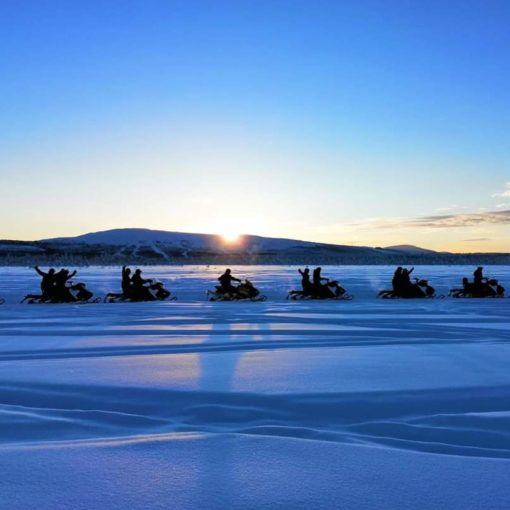
There is also the experiential factor. Riding through the Arctic night with snow spraying beneath your sled and the Northern Lights rippling overhead creates a memory that no observation deck can replicate. The combination of adventure and natural wonder is what draws visitors to Northern Lights safari Finland experiences year after year.
When Is the Best Time to Book a Northern Lights Snowmobile Safari?
The best time to book an Aurora Borealis tour in Finland is between late September and late March, with peak snowmobile safari season running from November through April when snow cover is reliable and the long polar nights provide maximum darkness for aurora viewing.
Within that window, the darkest months offer the most viewing hours. From December through February, Lapland experiences only a few hours of twilight each day, which means evening safaris departing around 18:00 can ride into deep darkness almost immediately. This extended darkness dramatically increases your chances of catching an aurora display.
Early Season vs. Peak Season
November and early December bring long nights but sometimes thinner snow cover. Conditions are still excellent for aurora hunting, and visitor numbers tend to be lower, which can mean a more intimate experience. By January and February, snow is abundant and temperatures drop well below freezing, creating the classic Arctic landscape most visitors picture.
Late Season Surprises
March and early April are often underrated. The days grow longer, but evenings still get dark enough for strong aurora sightings. Temperatures begin to moderate slightly, making the ride more comfortable. Solar activity does not follow a calendar, so late season trips can produce spectacular displays. We run our weekly evening snowmobile safaris from November through April, giving you plenty of flexibility to find a date that works.
Regardless of when you visit, booking an evening departure maximises your odds. Our Arctic evening snowmobile safari departs at 18:00 and spends roughly three hours in the wilderness, which provides a generous window for the aurora to appear.
What Should You Wear and Bring on an Aurora Snowmobile Tour?
You should wear multiple insulating layers topped with a windproof outer shell, along with thermal boots, thick gloves, a balaclava, and warm headwear. Temperatures during a Northern Lights snowmobile tour in Lapland regularly drop below minus 20 degrees Celsius, and wind chill on a moving sled makes proper clothing essential for comfort and safety.
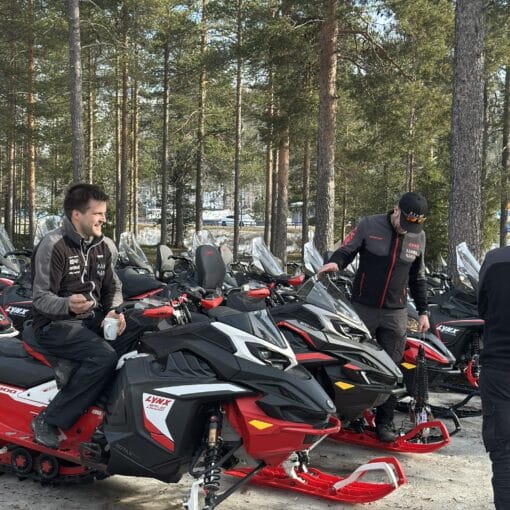
Most reputable safari operators provide thermal overalls, helmets, and sometimes boots as part of the tour package. However, your own base layers make a significant difference. Merino wool or synthetic thermal underwear works best because these materials wick moisture away from your skin while retaining heat. Avoid cotton, which absorbs sweat and chills you quickly.
For your hands, consider layering thin liner gloves inside heavy insulated mittens. This setup lets you remove the outer mitten briefly to operate a camera or phone without exposing bare skin to the cold. Speaking of cameras, bring one if you want to photograph the Aurora Borealis, but keep spare batteries in an inside pocket close to your body. Cold temperatures drain battery life rapidly.
- Base layer: Merino wool or synthetic thermal top and leggings
- Mid layer: Fleece jacket or wool sweater
- Outer layer: Windproof and waterproof jacket and trousers (or provided thermal suit)
- Feet: Thick wool socks and insulated winter boots
- Hands: Liner gloves plus insulated mittens
- Head and face: Warm hat, balaclava or neck gaiter, and helmet (provided)
- Extras: Camera with charged batteries, hand warmers, and a small backpack
One practical tip: avoid overdressing to the point where you cannot move comfortably on the snowmobile. You need to lean, steer, and shift your weight, so your clothing should be warm yet flexible. A valid driving licence is also required for every driver, so remember to bring yours along.
How Do Guides Decide Where to Stop for Aurora Viewing?
Guides choose aurora viewing stops based on a combination of real-time geomagnetic data, local weather forecasts, cloud cover radar, and their own experience of which locations around Levi offer the clearest, darkest skies. The decision is rarely made in advance because conditions can change by the hour.
Before each evening departure, experienced guides check the KP index, which measures geomagnetic activity on a scale from 0 to 9. In Lapland, even a KP value of 2 or 3 can produce visible aurora because you are already well within the auroral zone. Guides cross-reference this data with satellite-based cloud maps to identify pockets of clear sky within riding distance.
Once on the trail, guides rely on intimate knowledge of the local terrain. Years of operating in the Levi area teach you which frozen lakes provide unobstructed 360 degree views of the horizon, which hilltops sit above low cloud layers, and which forested routes offer natural wind shelter for comfortable stops. We have been running safaris from Levi since 2003, and that depth of local experience is something no app or forecast can replace.
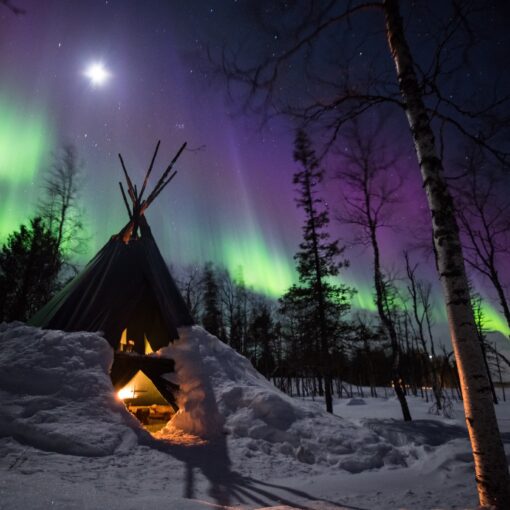
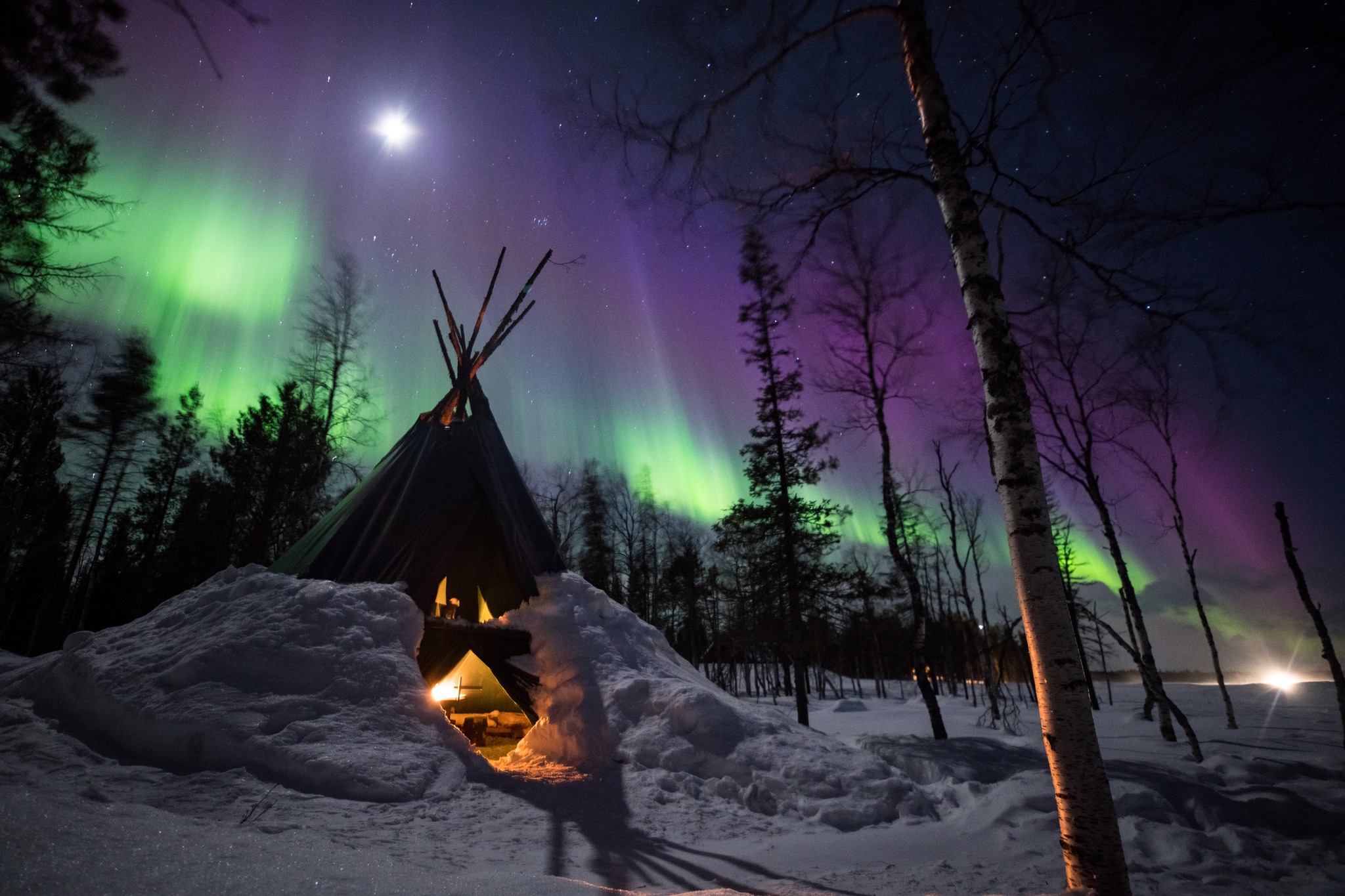
When the group reaches a promising spot, the guide will cut the engines and allow everyone to step off the snowmobiles. Silence and stillness are important because your eyes need several minutes to adjust to the darkness, and the absence of engine noise makes the experience far more immersive. Many tours include a stop at a traditional Lapp tent where you can warm up with coffee by a campfire while watching the sky overhead.
If conditions shift during the safari, guides will not hesitate to remount and ride to a better location. This adaptability is precisely what makes a snowmobile-based Aurora Borealis tour in Finland so effective compared to static viewing options. Small group sizes also help, because a compact group can move quickly and make spontaneous route changes without logistical headaches.