Every winter, thousands of visitors arrive in Levi, Finnish Lapland, with one dream at the top of their list: witnessing the aurora borealis. The big question that follows is whether a northern lights safari is worth the investment or whether simply stepping outside a cabin and looking up will do the trick. It is a fair question, and the honest answer depends on several factors, including trip length, weather conditions, and how much the experience itself matters beyond the sighting. This guide breaks down both options so the decision becomes clear.
Levi sits right inside the auroral zone, which means the northern lights are active overhead on many winter nights. That geographic advantage fuels the belief that all anyone needs is a cabin with a view. Sometimes that belief is correct. But “sometimes” is a risky word when a once-in-a-lifetime trip is on the line. Let’s look at both sides honestly.
The Case for Waiting at Your Cabin
Watching the aurora from a cabin doorstep can be a genuinely magical experience. On a clear, dark night with strong solar activity, the lights can appear directly overhead without any need to travel. A northern lights cabin stay offers undeniable comfort: warm drinks on hand, no schedule to follow, and the freedom to step outside whenever the sky looks promising.
For travelers staying a week or more, the odds of catching at least one clear display from a stationary location improve significantly. There is also something beautifully simple about spotting the first green shimmer while sitting on a cabin porch in total silence. No guide, no group—just the sky and the snow. When conditions align, it is hard to beat that intimacy.
Cost is another practical consideration. The cabin has already been paid for, so aurora viewing comes at no extra expense. For budget-conscious travelers who have several nights to work with, this approach can work well, especially if the accommodation is located away from the light pollution of the village center.
The Problem with Staying Put
Here is where the romantic cabin scenario runs into reality. The aurora borealis requires two things to be visible: solar activity and clear skies. Solar activity forecasts are widely available, but cloud cover is the variable that ruins more aurora nights than weak geomagnetic storms ever will. Levi’s subarctic climate means clouds can roll in fast and linger for days.
A cabin is a fixed point on the map. If thick cloud sits over Levi on a given evening, there is nothing a cabin guest can do except wait and hope. Meanwhile, 30 to 50 kilometers away, the sky might be completely clear. That gap between cloud and clarity is often the difference between seeing the lights and missing them entirely.
Short trips amplify this problem. Visitors spending just one to three nights in Lapland have a narrow window. Relying solely on cabin viewing during a brief stay is essentially a gamble. Some travelers win that gamble; many do not. The frustration of flying home without a single aurora sighting, knowing the lights were dancing just a short drive away, is something seasoned Lapland guides hear about regularly.
What a Guided Aurora Safari Actually Gives You
A guided aurora tour in Finland is not just a ride to a dark field. It is a carefully orchestrated evening built around maximizing the chances of a sighting while delivering an adventure that stands on its own, even if the aurora stays hidden.
Real-Time Weather Chasing
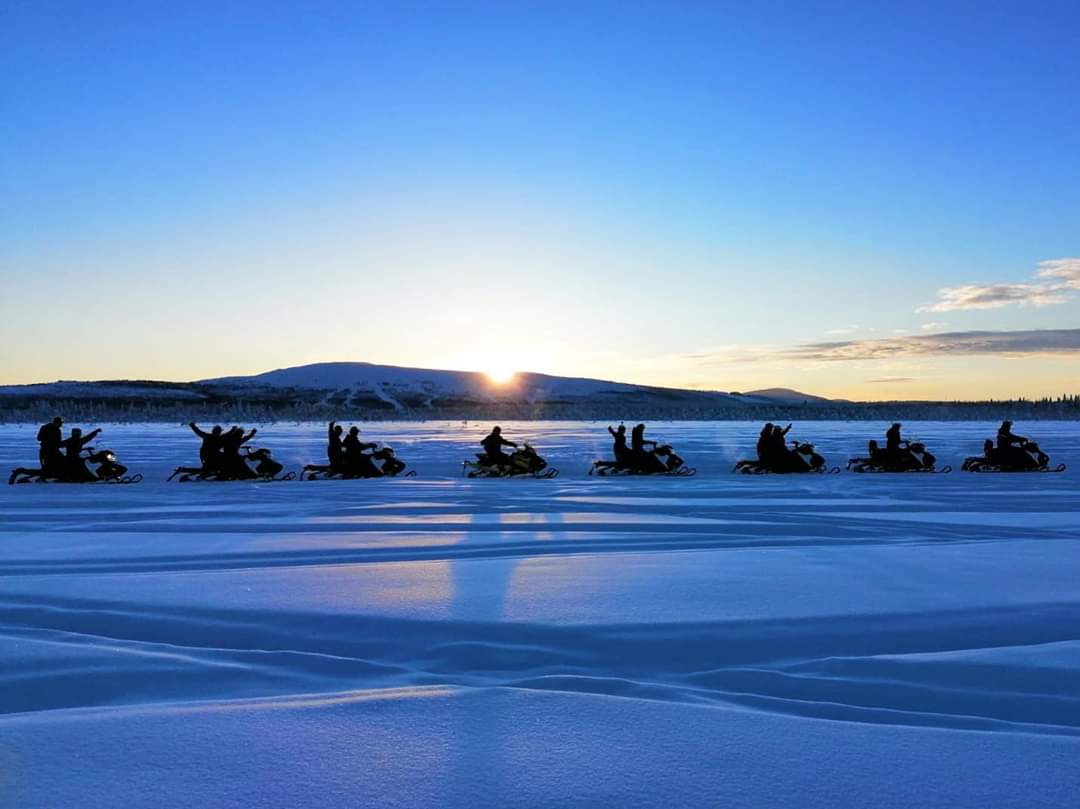
The single biggest advantage of a snowmobile aurora safari is mobility. Experienced local guides monitor real-time cloud-cover maps, satellite imagery, and aurora forecasts throughout the day. When evening arrives, they choose the route based on where the clearest skies are, not where the brochure says to go. If conditions shift mid-safari, the group can reposition. This ability to chase cloud gaps across the fells and frozen lakes around Levi and Kittilä is something no cabin can replicate.
Local Knowledge of Dark-Sky Areas
Guides who have spent years working in the region know the best dark-sky spots intimately. They understand which hilltops offer unobstructed northern horizons, which frozen lakes provide 360-degree views, and which valleys tend to trap clouds. At Kinos Safaris, we have operated in Levi since 2003, and our guides bring more than two decades of terrain knowledge that no app or forecast website can match.
The Experience Beyond the Lights
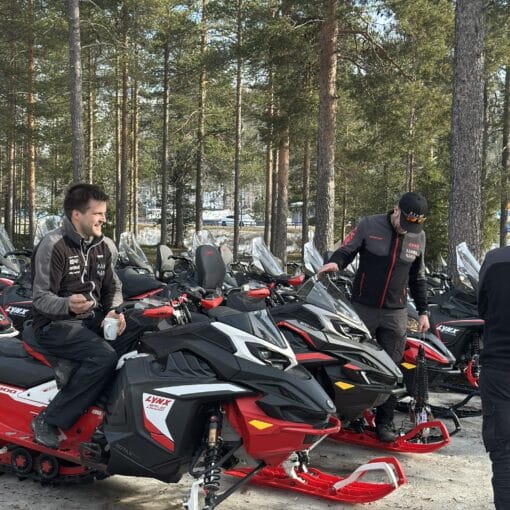
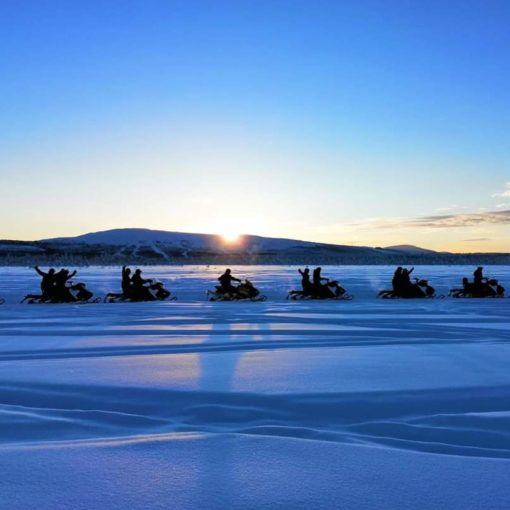
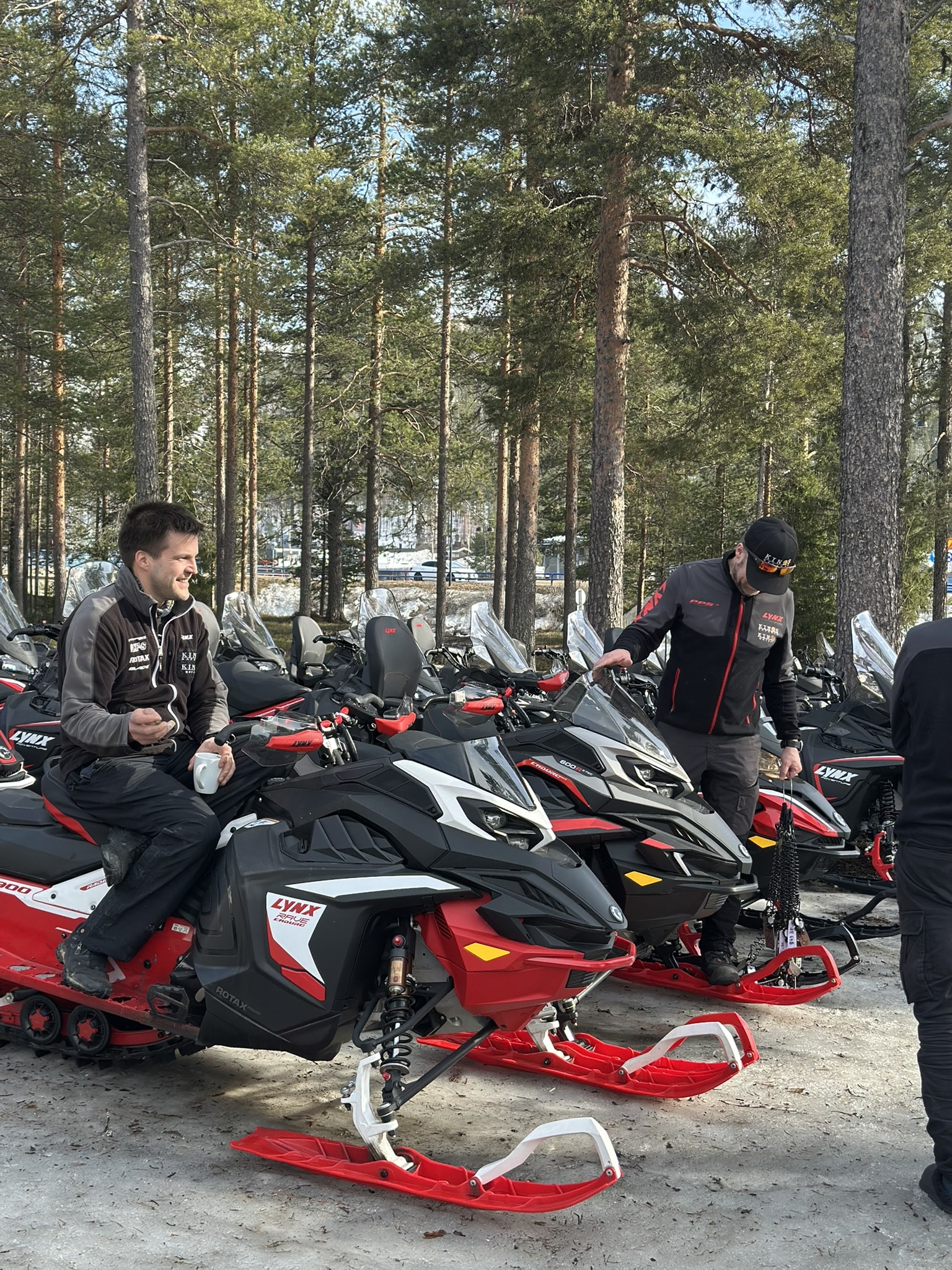
A Lapland aurora experience on a snowmobile safari includes far more than staring at the sky. The ride itself—gliding through snow-covered wilderness under a canopy of stars—is extraordinary. Add hot drinks around a fire, the quiet crackle of a bonfire in the Arctic air, and the shared excitement of a small group, and the evening becomes memorable regardless of aurora intensity. Our evening safaris keep group sizes small to ensure a personal, unhurried atmosphere where every guest feels the magic of the wilderness.
Cloud Cover: The Deciding Factor
Cloud cover is the single most important variable in any northern lights viewing strategy, yet it is the factor most visitors underestimate. Solar storms can be forecast days in advance with reasonable accuracy. Clouds, on the other hand, shift hour by hour and can vary dramatically across distances as short as 20 kilometers.
This is precisely why a guided northern lights tour tips the odds so heavily. A guide with access to live weather data and a snowmobile can cover ground quickly, repositioning to exploit breaks in the cloud layer. Cabin guests, by contrast, are locked into whatever weather system sits above their roof. On partly cloudy nights, this mobility advantage becomes decisive. Guides often find pockets of clear sky that would be invisible from a cabin window.
It is worth noting that on perfectly clear nights with strong aurora activity, both the cabin guest and the safari guest win. The difference shows up on marginal nights, when clouds threaten but gaps exist. Those marginal nights are far more common than the postcard-perfect ones, and they are where guided tours earn their value.
Cost vs. Experience: Honest Breakdown
A guided snowmobile aurora safari in Levi typically costs between 100 and 200 euros per person, depending on duration and inclusions. That is a meaningful addition to a holiday budget, and it deserves honest evaluation.
From a pure cost-per-sighting perspective, a cabin stay appears cheaper because the viewing opportunity comes “free” with the accommodation. But this calculation ignores the probability factor. If a short-stay visitor skips the guided tour, saves 150 euros, and then sees nothing due to clouds, the real cost is the trip’s unfulfilled purpose. Conversely, the safari fee buys professional weather chasing, local expertise, and a wilderness adventure that delivers value even on nights when the aurora is faint or absent.
For travelers who have budgeted carefully for a Lapland holiday, the guided safari often represents the highest return on investment of any single activity. The combination of increased aurora odds and the standalone quality of the snowmobile experience makes it difficult to regret. Our Arctic evening snowmobile safari is designed exactly for this purpose: a three-hour evening adventure that blends aurora hunting with a genuine Arctic atmosphere.
Verdict: When Each Option Makes Sense
Both approaches have a place, and the right choice depends on the trip.
Choose cabin viewing when staying in Levi for five or more nights, when the accommodation is in a dark location away from village lights, and when the forecast shows several clear nights ahead. Longer stays provide enough chances that patience can pay off. Combining a few cabin evenings with one guided safari is an excellent middle ground.
Choose a guided aurora safari when the trip is short—one to three nights, especially. For brief visits, a snowmobile aurora safari in Levi is strongly recommended because there simply is not enough time to wait out bad weather. The guide’s ability to chase clear skies transforms a hopeful evening into a strategic one. Even on longer trips, booking at least one guided tour dramatically increases the likelihood of witnessing a strong display.
The best way to see the northern lights in Finnish Lapland is to combine both strategies: enjoy the quiet cabin evenings and invest in one guided safari to improve the odds. That way, the trip delivers no matter what the clouds decide to do.
FAQ
Is a northern lights safari worth it if the forecast shows clear skies?
Yes. Even on clear nights, a guided safari adds value through expert positioning at the best dark-sky locations, the snowmobile adventure itself, and the wilderness atmosphere with hot drinks and a bonfire. Guides know which viewpoints offer the most dramatic aurora displays, which can make the difference between a faint glow and a sky-filling show.
Can I see the northern lights from Levi village center?
It is possible on strong aurora nights, but light pollution from hotels, restaurants, and street lamps significantly reduces visibility. The best sightings happen in dark locations away from artificial light, which is one reason guided tours travel into the surrounding wilderness and onto frozen lakes.
What happens on a northern lights safari if the aurora does not appear?
A well-designed aurora safari is built to be rewarding regardless. The snowmobile ride through the Arctic landscape, stargazing under unpolluted skies, warm drinks by a fire, and the thrill of exploring Lapland at night all make the evening worthwhile. At Kinos Safaris, we focus on creating a complete wilderness experience so that guests leave with a great memory, aurora or not.
Related Articles
- Lapp Tent vs Fast & Easy Snowmobile Safari in Levi: Which Should You Choose?
- Family Winter Safaris in Levi: Huskies, Reindeer, Elves and Snowmobiles
- Where to Stay in Levi: Why the Village Centre Wins?
- Can I book a private snowmobile safari with Kinos Safaris?
- Can I rent snowshoes in Levi for independent hiking?