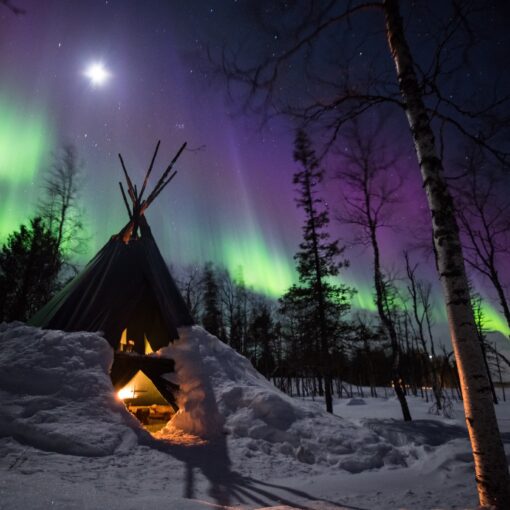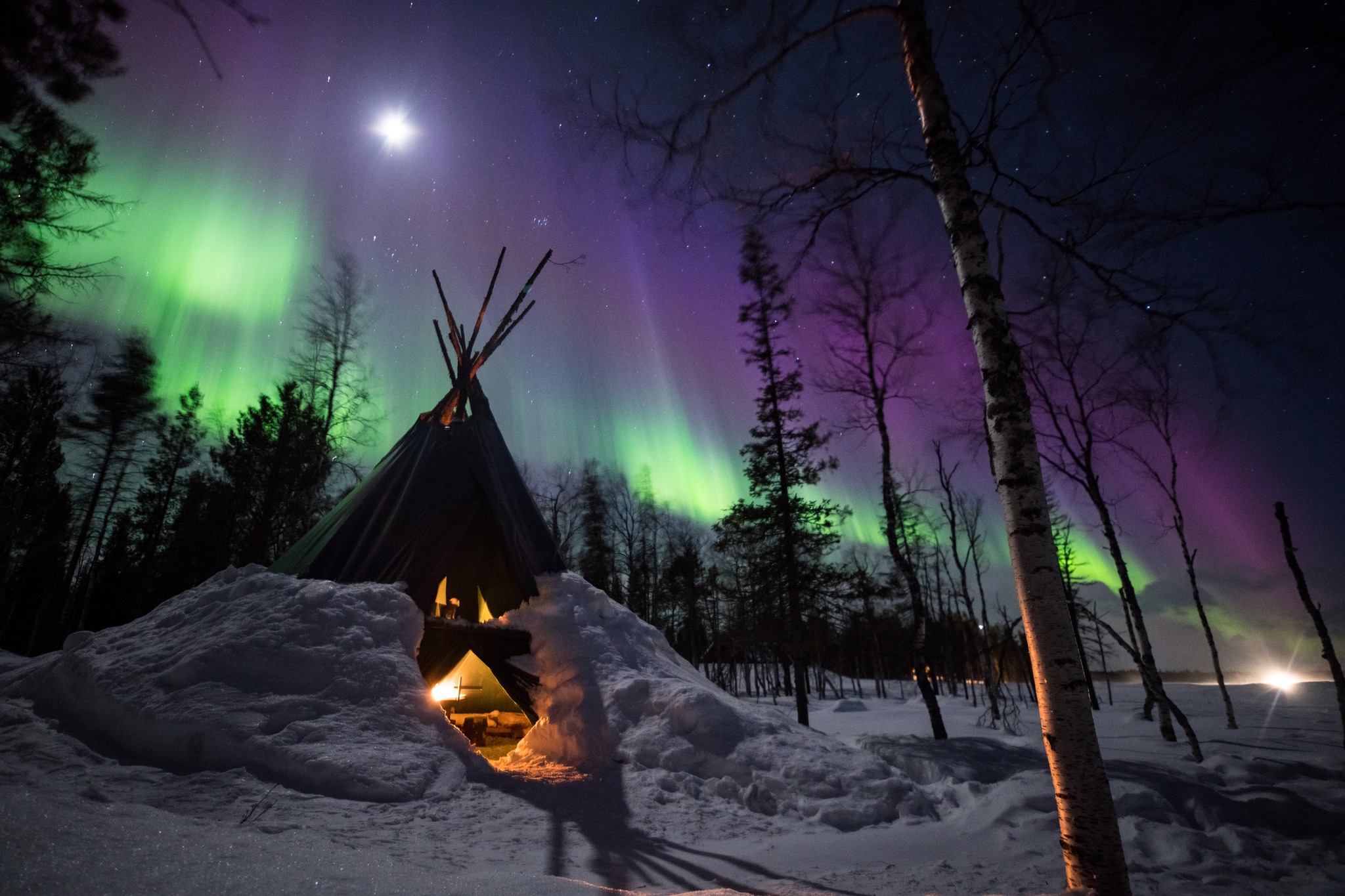
Imagine standing on a frozen hilltop in Finnish Lapland, the air so cold and still that every breath crystallizes in front of you. Then, without warning, a pale green ribbon of light unfurls across the sky, shifting into violet, pink, and electric blue. The northern lights in Levi, Finland, are one of nature’s most breathtaking spectacles, and this small Arctic resort town sits right beneath the auroral zone, making it one of the most reliable places on Earth to witness the aurora borealis. But timing matters. Knowing the best time to see the northern lights in Levi can mean the difference between a once-in-a-lifetime display and staring at an overcast sky. This guide breaks down the season, the science, and the practical strategies that will help turn an aurora trip into an unforgettable memory.
The Aurora Season: September to April
The northern lights season in Finland stretches roughly from early September through late March, or even into April. During this window, nights in Levi grow long enough and dark enough for the aurora borealis to become visible. In the heart of winter, the polar night (known locally as kaamos) means the sun barely rises at all, giving aurora hunters nearly 24 hours of potential darkness in December and January.
Outside this window, the midnight sun floods the sky with continuous daylight from late May through July, making aurora sightings impossible regardless of solar activity. The transitional months of August and April sit on the edges: occasionally dark enough for a faint display, but far from ideal. For anyone planning an aurora trip to Levi, targeting the core September-to-March period provides the strongest foundation.
It is worth noting that the aurora does not simply switch on and off with the calendar. Geomagnetic activity occurs year-round, but human eyes need darkness to perceive it. That is why the length and depth of Arctic darkness play such a central role in determining when to see the northern lights in Lapland.
Which Months Give the Best Odds?
Not every month within the aurora season offers equal chances. Research in solar and geophysical science has long established that geomagnetic activity tends to peak around the equinoxes—in September and October, and again in February and March. This happens because of the way Earth’s magnetic field aligns with the solar wind during equinox periods, allowing charged particles to funnel more efficiently toward the poles.
Early Season: September and October
September marks the return of dark skies after the midnight sun, and it often delivers surprisingly vivid displays. The landscape is still tinged with autumn colours, and temperatures are relatively mild, hovering around zero degrees Celsius. October deepens the darkness and maintains strong geomagnetic potential, making it an excellent choice for visitors who prefer to avoid the extreme cold of midwinter.
Deep Winter: November Through January
These months offer the longest nights, with polar darkness dominating December. While the sheer volume of dark hours increases the viewing window, cloud cover in Levi tends to be heavier during November and December. January often brings crisper, clearer skies as high-pressure systems settle over Lapland. The trade-off is temperatures that can plunge to minus 25 degrees Celsius or lower, so proper layering is essential.
Late Season: February and March
Many seasoned aurora chasers consider late February and March the sweet spot for northern lights viewing in Levi. The equinox effect boosts geomagnetic activity, daylight returns just enough to enjoy daytime winter activities, and statistically, skies tend to be clearer than in early winter. March also brings longer twilight periods that can frame the aurora against stunning pastel horizons.
Understanding the KP Index and What It Means for You
The KP index is a scale from 0 to 9 that measures global geomagnetic disturbance. Think of it as a simple weather forecast, but for space weather. A higher number means stronger geomagnetic activity and, typically, more intense and widespread auroral displays.
Because Levi sits at approximately 67.8 degrees north latitude, well within the auroral oval, even a KP index of 2 or 3 can produce visible northern lights overhead. Locations further south, such as Helsinki or Stockholm, might need a KP of 5 or higher for any sighting at all. This is one of the key advantages of the Levi, Finland, aurora experience: the threshold for visibility is remarkably low.
Several free apps and websites make it easy to monitor the KP index in real time. The Finnish Meteorological Institute provides aurora forecasts tailored to Lapland, and apps like “My Aurora Forecast” or the University of Alaska’s aurora prediction tool offer push notifications when geomagnetic activity spikes. Checking these forecasts each evening during a visit to Levi can dramatically improve the odds of catching a display.
One important nuance: a high KP index does not guarantee a visible aurora if clouds block the view. Conversely, a modest KP reading of 2 under perfectly clear skies in Levi can produce a mesmerizing green arc stretching from horizon to horizon. The interplay between solar activity and local weather is what truly determines success.
Weather, Cloud Cover and Dark Skies Near Levi
Clear skies are the single most important local factor for aurora borealis visibility. No amount of solar activity matters if a thick blanket of clouds sits between the viewer and the upper atmosphere where the lights dance, typically 100 to 300 kilometres above Earth’s surface.
Levi benefits from its inland position in Finnish Lapland, which generally experiences drier and clearer conditions than coastal areas of northern Norway or Sweden. High-pressure systems originating from Siberia or the Arctic often bring cold, stable, and cloud-free nights to the Levi region, particularly from January through March.
Escaping Light Pollution
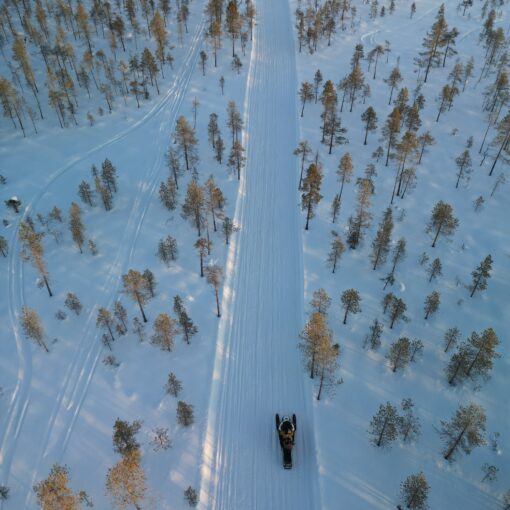
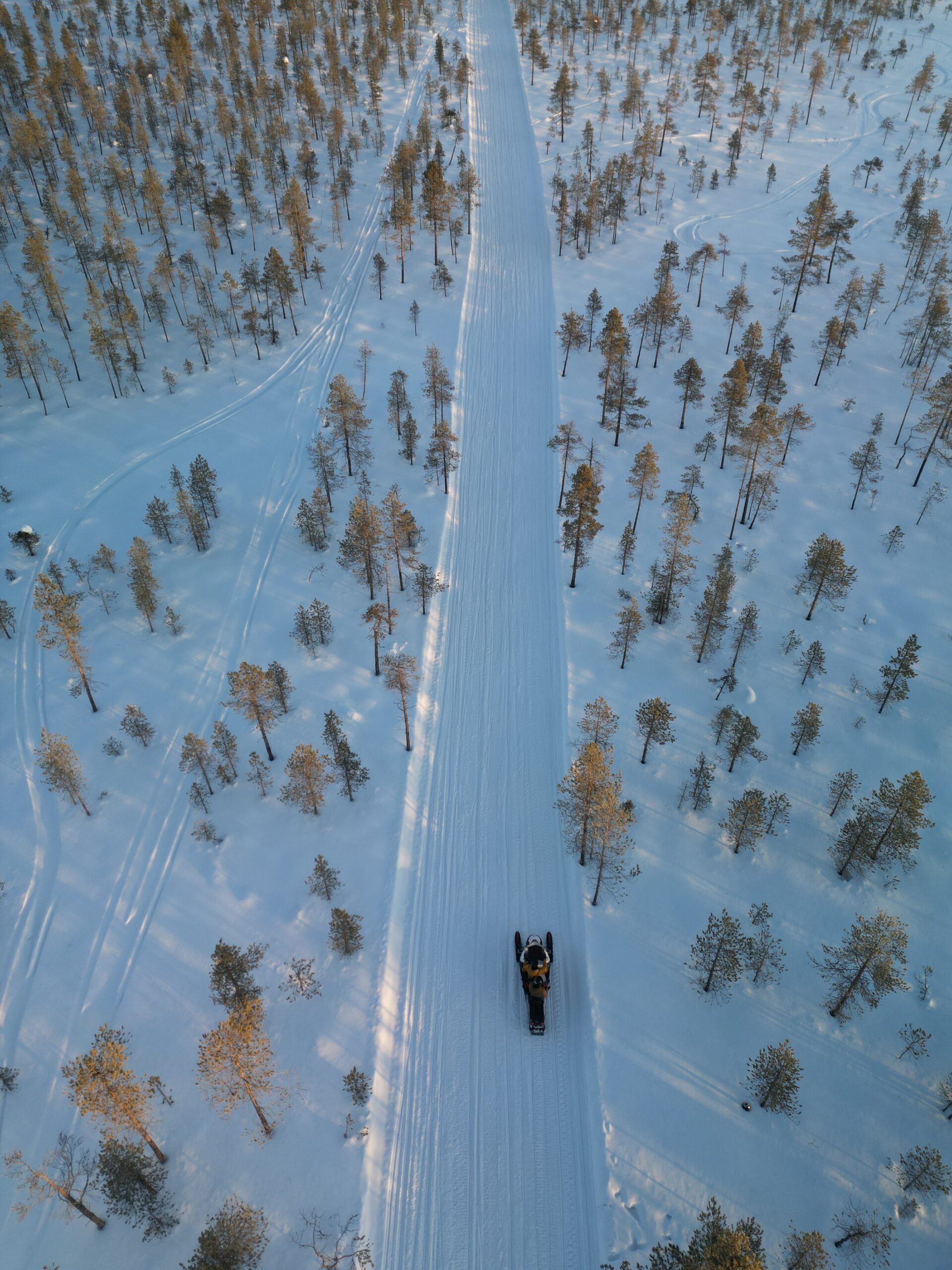
While Levi village itself is a small resort town with modest artificial lighting, the surrounding wilderness offers some of the darkest skies in Europe. Moving just a few kilometres away from the town centre, whether by snowmobile trail or forest road, dramatically reduces light pollution and reveals fainter auroral structures that would be invisible in a brighter setting. The dark-sky conditions in Lapland are a genuine asset that many aurora destinations further south simply cannot match.
Reading the Cloud Forecast
Experienced aurora hunters in Levi check cloud-cover forecasts just as carefully as the KP index. Services like the Finnish Meteorological Institute’s cloud-cover map or the “Clear Outside” app show hour-by-hour predictions for specific locations. When clouds are predicted over Levi itself, it is sometimes possible to find a gap in the cloud cover 30 to 50 kilometres away—a strategy that works best with local knowledge and a fast mode of transport.
Why a Guided Snowmobile Aurora Safari Maximises Your Chances
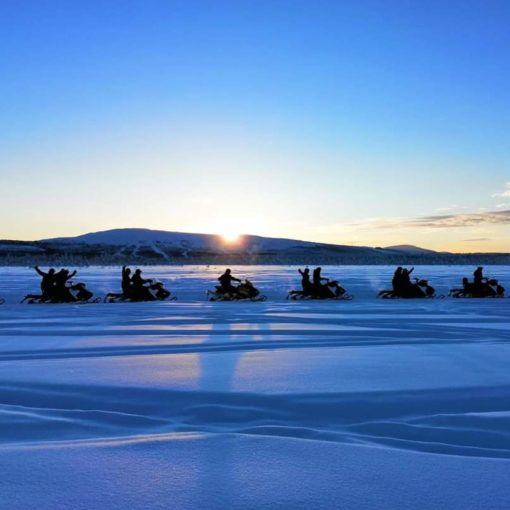
Heading out independently to search for the northern lights is certainly possible, but a guided snowmobile aurora safari offers several practical advantages that are hard to replicate alone. Experienced guides monitor both the KP index and real-time cloud cover throughout the evening, adjusting routes on the fly to chase clear-sky pockets. This mobility is a game-changer on partly cloudy nights, when the aurora may be visible from one valley but completely hidden from another just 20 kilometres away.
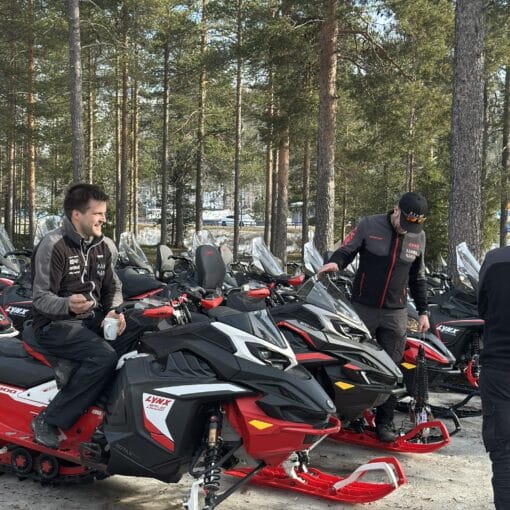
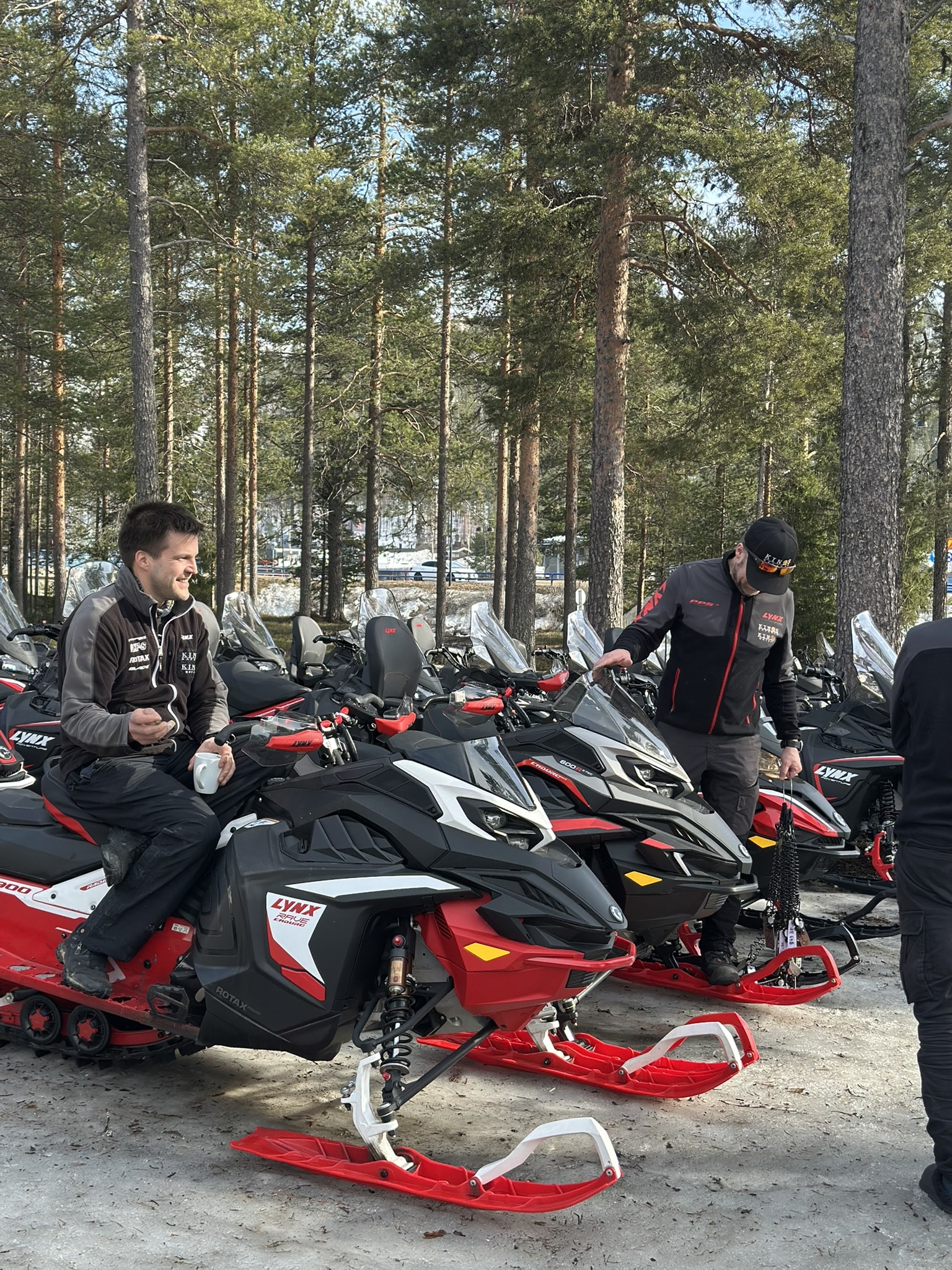
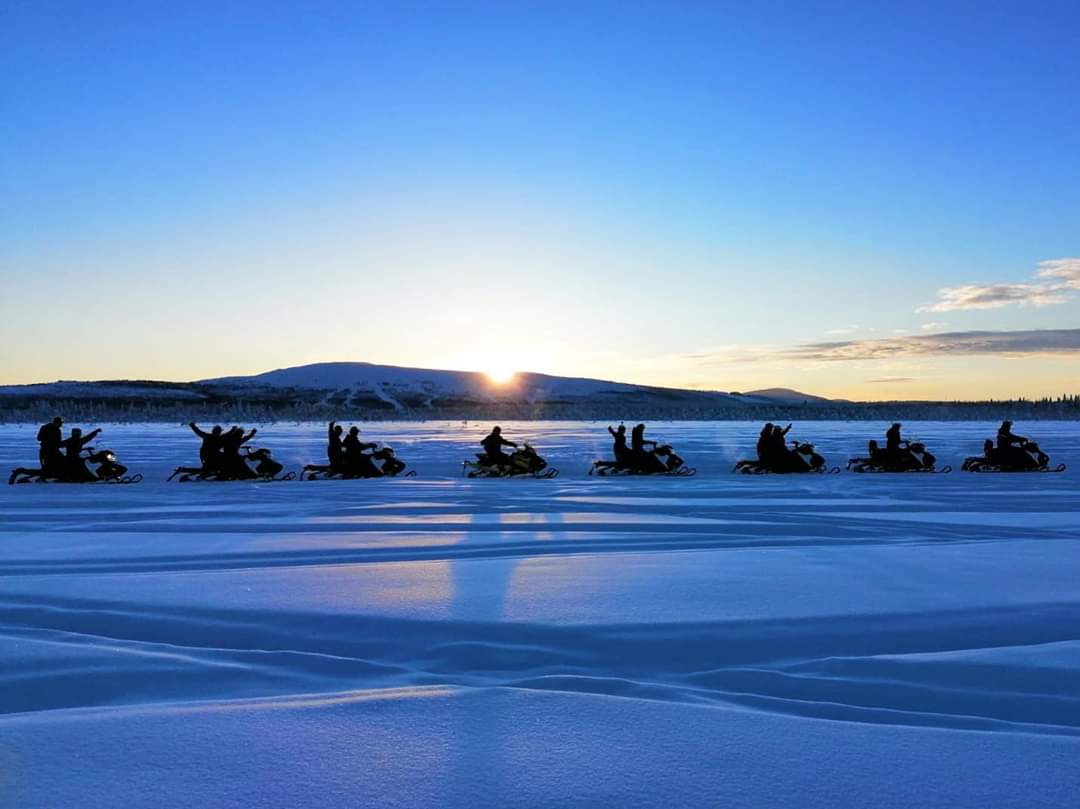
At Kinos Safaris, we have been running guided experiences in Levi for over 20 years, and our evening aurora snowmobile programme is built around exactly this kind of adaptive approach. Our guides know the local terrain intimately, from open fells with panoramic sky views to sheltered forest trails where riders can warm up with hot drinks by a campfire while waiting for the lights to intensify. Starting from our Safari House at Myllyjoentie 4 in the heart of Levi, these excursions combine the thrill of snowmobiling through the Arctic wilderness with the best possible chance of witnessing the aurora borealis.
Beyond the practical benefits, there is something deeply atmospheric about gliding through a snow-covered landscape under a sky alive with colour. The silence of the wilderness, broken only by the hum of the snowmobile engine, creates a sensory experience that simply standing in a car park cannot replicate.
Practical Tips for Your Northern Lights Hunt
A few straightforward preparations can make a significant difference in both comfort and success when chasing the aurora in Levi.
Dress for Extreme Cold
Temperatures during the aurora season regularly fall well below minus 15 degrees Celsius, and standing still while watching the sky accelerates heat loss. Layering is essential: a moisture-wicking base layer, an insulating mid-layer of fleece or down, and a windproof outer shell. Thermal boots rated to at least minus 30 degrees, insulated gloves, and a balaclava or neck gaiter protect the extremities, where the risk of frostbite is highest.
Stay Patient and Stay Out Late
Aurora activity does not follow a strict timetable. Displays can appear at any point during the dark hours, though statistically, the period between 10 p.m. and 2 a.m. tends to be most active. Committing to at least three or four nights of watching during a week-long visit significantly increases the probability of catching a strong display. One cloudy night does not mean the entire trip is lost.
Camera Settings for Beginners
Most modern smartphones now have a night mode capable of capturing the aurora, but a camera with manual settings produces far better results. A wide-angle lens, a sturdy tripod, an ISO between 1600 and 3200, an aperture of f/2.8 or wider, and an exposure time of 8 to 15 seconds are a reliable starting point. Turning off autofocus and manually focusing on a distant star or light ensures sharp results.
Plan Multiple Activities
Because aurora sightings can never be guaranteed on any single night, building a trip around a variety of winter experiences keeps the holiday rewarding regardless of sky conditions. Daytime snowmobile safaris, reindeer-farm visits, and ice-fishing excursions all complement the evening aurora hunt and showcase a different side of Lapland life.
FAQ
Can you see the northern lights in Levi every night?
No. The aurora borealis depends on both geomagnetic activity and clear skies. During the September-to-March season, Levi typically experiences visible aurora on a significant number of clear nights, but cloud cover or low solar activity can prevent sightings on any given evening. Staying for several nights improves the chances considerably.
What is the best month to see the northern lights in Levi, Finland?
Late February and March are widely regarded as offering the best combination of geomagnetic activity, clearer skies, and comfortable temperatures. However, September, October, and January also deliver excellent opportunities. The best time to see the northern lights in Levi depends partly on personal preference for weather and daylight conditions.
Do I need to leave Levi town to see the aurora?
Faint displays can sometimes be seen from within the village, but moving away from artificial light sources dramatically improves the experience. Even a short snowmobile ride into the surrounding wilderness reveals far more auroral detail and colour against the dark Lapland sky.
How do I know if the northern lights will appear tonight?
Check the KP index and the local cloud-cover forecast using free tools like the Finnish Meteorological Institute’s aurora page or apps such as My Aurora Forecast. A KP of 2 or above, combined with clear skies in Levi, gives a strong chance of a sighting.
The northern lights are one of those rare natural phenomena that no screen or photograph can fully capture. Standing beneath a living, breathing curtain of light in the silence of the Arctic is something that stays with you long after the cold fades from your fingertips. If Levi is calling, we would love to help make it happen. Explore our Northern Lights Snowmobile Safari in Levi and let us guide you to the best seat in the house—somewhere out on a frozen fell, with nothing between you and the sky.
Related Articles
- How Much Does Snowmobile Rental Cost in Levi in Winter 2026–2027?
- Canoe, Boat and Kayak Rental in Levi for Summer Adventures
- Learning to Fly Fish in Lapland: What the Course Covers
- What is the difference between standard and premium snowmobiles at Kinos Safaris?
- Where is the winter rental pickup location in Levi?