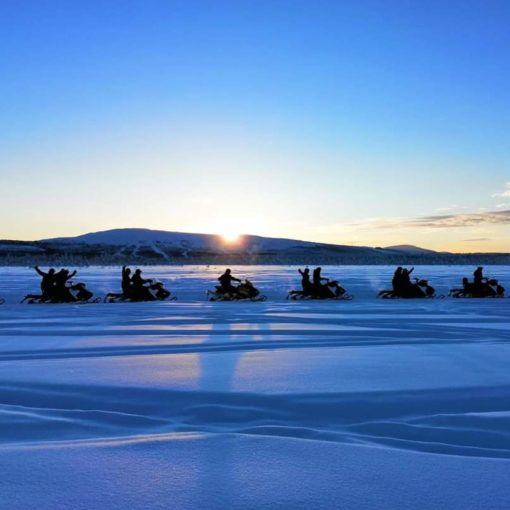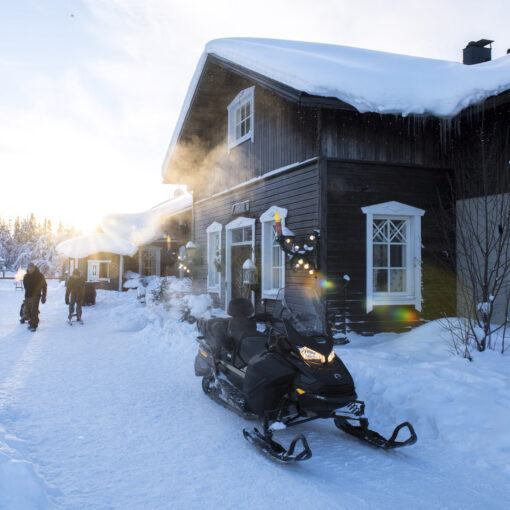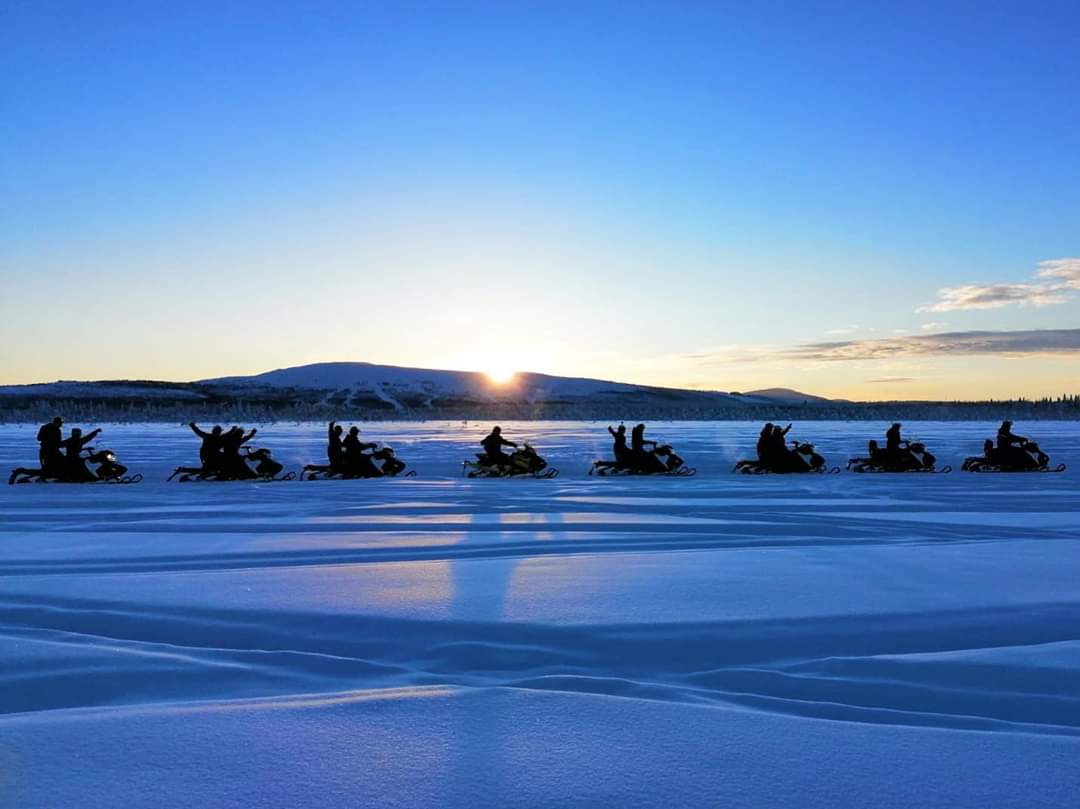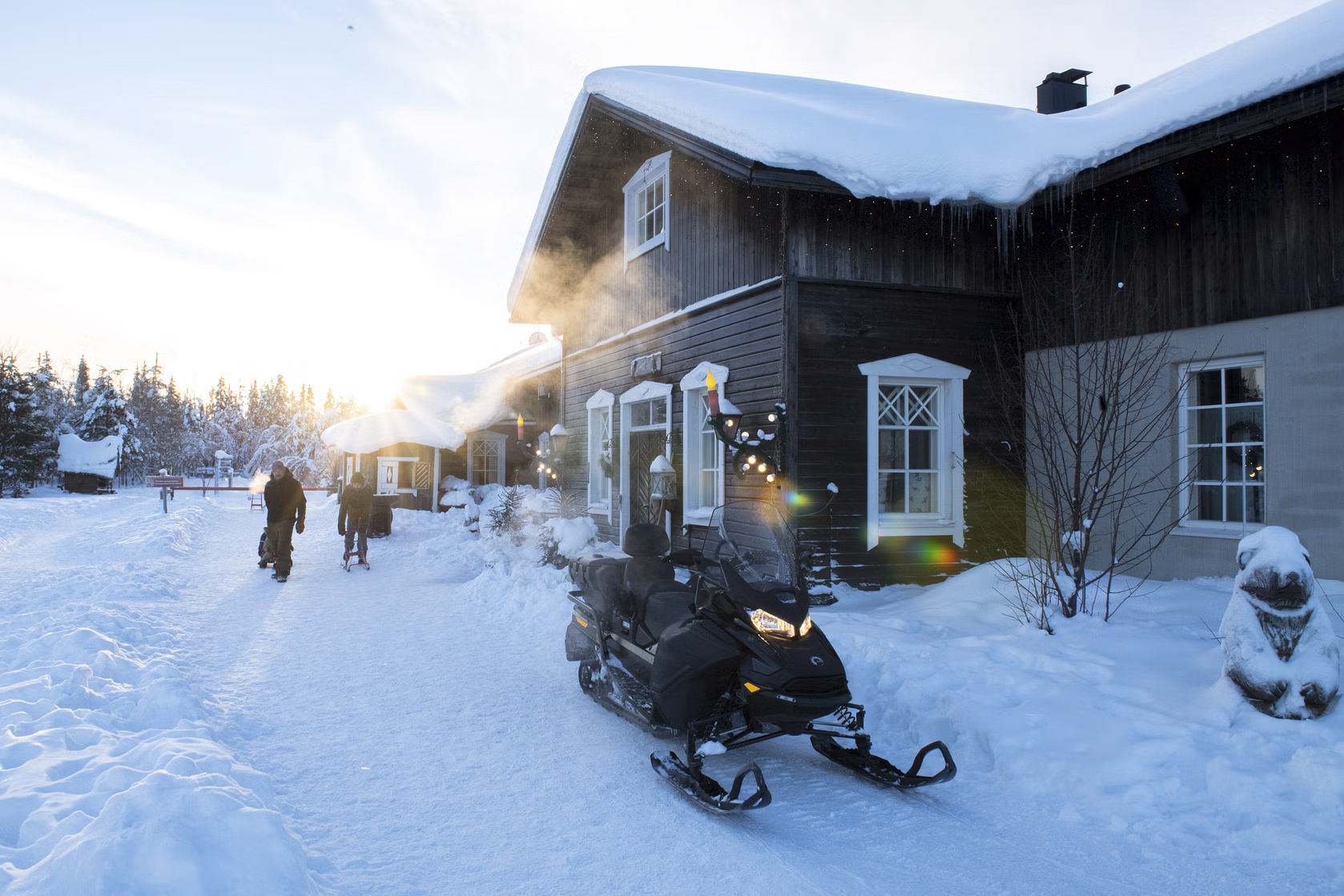
Planning a snowmobile safari in Lapland is exciting, but one question comes up more than almost any other: What should I wear? Temperatures in Finnish Lapland can drop well below minus twenty degrees Celsius, and sitting on a snowmobile at speed creates significant wind chill on top of that. Knowing what to wear on a snowmobile safari in Lapland can make the difference between an unforgettable Arctic adventure and a miserably cold afternoon spent counting the minutes until it ends.
The good news? Getting it right is straightforward once you understand the layering system and know what your safari operator already provides. This complete Lapland snowmobile packing list covers every piece of clothing and gear you’ll need, from base layers to face protection, so nothing gets forgotten at home.
What Kinos Safaris Provides for You
Before buying anything new, it helps to know what’s already included. At Kinos Safaris, we provide every guest with insulated safari overalls, a helmet, and warm Arctic boots. These are professional-grade items designed specifically for extended time outdoors in Lapland’s winter conditions. The overalls are wind- and water-resistant, and the boots are rated for extreme cold.
Because we supply the outer shell and footwear, there’s no need to invest in expensive snowmobile-specific outerwear. Guests should focus on what goes underneath: the personal layers that trap body heat and wick away moisture. Everything on the packing list below can be brought from home or picked up affordably before your trip. Think of it this way: we handle the armor, and your job is to bring the insulation.
The Layering System: Base, Mid, and Outer
A cold-weather layering system is the foundation of staying warm during any Arctic adventure. Rather than relying on one thick garment, layering uses multiple thinner layers that work together to manage warmth and moisture. Each layer has a specific job.
Base Layer: Moisture Management
The base layer sits directly against the skin. Its primary purpose is to wick sweat and moisture away from the body. Merino wool is the gold standard because it insulates even when damp, regulates temperature naturally, and resists odor. Technical synthetic fabrics designed for winter sports are also a solid choice.
The single most important rule: avoid cotton. Cotton absorbs moisture, holds it against the skin, and causes rapid cooling. A cotton T-shirt under safari overalls can turn a comfortable ride into a dangerously cold one. This applies to underwear and socks as well. Choose a full-length merino or synthetic top and matching long leggings.
Mid Layer: Insulation
The mid layer traps warm air close to the body. A fleece jacket or a lightweight down jacket works perfectly. For the lower body, fleece trousers are recommended when temperatures drop below minus fifteen degrees. In milder temperatures, base-layer leggings combined with the insulated safari overalls are usually sufficient.
Outer Layer: Wind and Weather Protection
The outer layer is handled by the safari overalls we provide. They’re designed to block wind and keep snow out, so guests don’t need to bring a separate shell jacket for the safari itself. A personal winter jacket is still useful for walking around Levi before and after the safari, but it stays behind once the overalls go on.
Hands and Feet: The Most Important Body Parts to Keep Warm
Extremities lose heat fastest, and cold fingers or toes can ruin an otherwise perfect day. Hands and feet deserve extra attention when preparing for a Lapland snowmobile trip.
Hands
The best approach is a two-layer system: thin liner gloves worn inside thicker insulated mittens. The liner gloves allow you to handle zippers, cameras, or phone screens during stops without exposing bare skin to the cold. Mittens are significantly warmer than fingered gloves because the fingers share warmth inside a single compartment. For temperatures below minus fifteen, choose mittens with a waterproof outer shell and thick insulation.
Feet
We supply warm Arctic boots, but personal wool socks are still strongly recommended. Wear two pairs: a thinner merino wool sock as a base and a thicker wool hiking sock over it. This creates an insulating air pocket and helps manage moisture. Avoid cotton socks entirely, and make sure the boots still fit comfortably without squeezing your toes. Tight footwear restricts blood flow and can actually make your feet colder.
Head, Face, and Neck
A surprising amount of heat escapes through the head, face, and neck, especially at snowmobile speeds, where wind chill is a constant factor. The helmet we provide covers the top of the head, but everything below it needs personal protection.
A balaclava is the most versatile option. It covers the head, neck, and lower face in one piece and fits comfortably under a helmet. Alternatively, a warm neck gaiter or buff can be pulled up over the nose and mouth while a thin beanie covers the head beneath the helmet. For daytime safaris, sunglasses are essential because the sun reflecting off white snow creates intense glare that can cause snow blindness. Goggles are optional but useful in heavy snowfall or at very low temperatures, when exposed skin around the eyes becomes vulnerable.
Complete Packing List
Here is the definitive snowmobile safari packing list, organized by category. Print it, screenshot it, or bookmark it for packing day.
Base Layer
- Merino wool or synthetic long-sleeve top
- Merino wool or synthetic long leggings
- Moisture-wicking underwear (no cotton)
Mid Layer
- Fleece jacket or lightweight down jacket
- Fleece trousers (for temperatures below minus 15°C)
Hands
- Thin liner gloves (merino or synthetic)
- Thick insulated mittens (waterproof preferred)
Feet
- Thin merino wool socks (inner pair)
- Thick wool hiking socks (outer pair)
- Spare pair of dry socks (for after the safari)
Head, Face, and Neck
- Balaclava or neck gaiter plus a thin beanie
- Sunglasses (UV protection)
- Goggles (optional; recommended for extreme cold)
Extras
- Hand warmers (disposable heat packs—great insurance for very cold days)
- Toe warmers (adhesive type that stick inside boots)
- Small backpack or waist bag for personal items
- Lip balm with SPF
- Moisturizer (cold, dry air is harsh on skin)
What NOT to Bring
Knowing what to leave behind is just as important as knowing what to pack. Some common clothing choices are actively counterproductive in Arctic conditions.
- Jeans: Denim is stiff, restrictive, and made of cotton. It absorbs moisture, freezes in cold air, and provides almost no insulation. Jeans are the number-one clothing mistake on winter safaris.
- Cotton T-shirts or hoodies: As mentioned above, cotton retains moisture and accelerates heat loss. This includes cotton leggings and cotton socks.
- Bulky ski jackets: There’s no need for a heavy outer jacket because the safari overalls serve that purpose. A bulky jacket underneath the overalls restricts movement and can actually make the ride less comfortable.
- Tight-fitting shoes or boots: Personal boots aren’t needed since we provide Arctic footwear, but if you’re wearing shoes to the meeting point, avoid anything that compresses your feet.
- Scarves: Loose scarves can be a safety hazard around snowmobile machinery. Use a neck gaiter or balaclava instead.
Dressing for Different Temperatures (-5°C vs. -25°C)
Lapland winter temperatures vary significantly depending on the month and weather patterns. A safari in early December at minus five feels very different from a January outing at minus twenty-five. Adjusting the layering system to the forecast makes all the difference.
Mild Cold: -5°C to -10°C
At these temperatures, the standard setup works well. A merino base-layer top and leggings, a fleece jacket as a mid layer, and the provided overalls and boots will keep most people comfortable. One pair of wool socks is usually enough, though two never hurts. Liner gloves and insulated mittens handle the hands, and a neck gaiter protects the face.
Deep Cold: -15°C to -25°C
When the thermometer drops further, it’s time to add layers. Swap the fleece mid layer for a down jacket, or wear both. Add fleece trousers under the overalls. Double up on wool socks. Use a full balaclava rather than just a neck gaiter, and consider goggles to protect your face from wind chill. Disposable hand and toe warmers become genuinely valuable at these temperatures rather than just a nice extra.
A quick check of the weather forecast the evening before the safari takes thirty seconds and can inform smart layering decisions. When in doubt, bring an extra layer in a small bag. It’s always easier to remove a layer than to wish for one that was left at the hotel.
FAQ
Do I need to buy special Arctic clothing for a snowmobile safari?
No. We provide insulated overalls, a helmet, and Arctic boots for every guest. The only personal items needed are base and mid layers (merino wool or synthetic), warm socks, mittens, and face protection. Most travelers already own suitable items or can find affordable options at any outdoor or sports store before the trip.
Can I wear glasses under the snowmobile helmet?
Yes. The helmets we provide accommodate most eyeglasses comfortably. If you wear glasses, a neck gaiter pulled up over the nose can sometimes cause fogging. An anti-fog spray or cloth applied to the lenses before the safari helps prevent this. Contact lenses are another practical option for safari day.
What if I get too warm during the safari?
Overheating is less common than getting cold, but it does happen, especially during stops when walking around or visiting a cozy kota for hot drinks. The beauty of the layering system is its flexibility. Unzipping the overalls or removing a mid layer during a break takes only a moment. This is another reason to avoid single bulky garments and rely on multiple thinner layers instead.
Any questions about what to bring on your Lapland snowmobile safari? Get in touch with us before your trip, and we’ll make sure you arrive prepared for an unforgettable Arctic experience. Reach us at [email protected], call +358 50 403 2000, or visit kinossafaris.fi.
Related Articles
- Multi-Day Snowmobile Safari in Finnish Lapland: What to Expect
- Snowmobile Tours in Levi: Private vs Shared Safaris, Prices and How to Choose
- How do you plan a tailored winter activity program for small groups?
- What to expect on a multi-day snowmobile tour in Lapland
- What is included in a snowmobile rental from Kinos Safaris?